As the self continually develops with each and every interaction that it makes with its immediate environment since proximal processes are at its core, it will surely encounter numerous tensions in various facets throughout its life. These tensions serve as a turning point in one’s life as he/she evolves after through each and every trial. One can think of this process as the evolutions of Pokémon and the digivolution of Digimons.
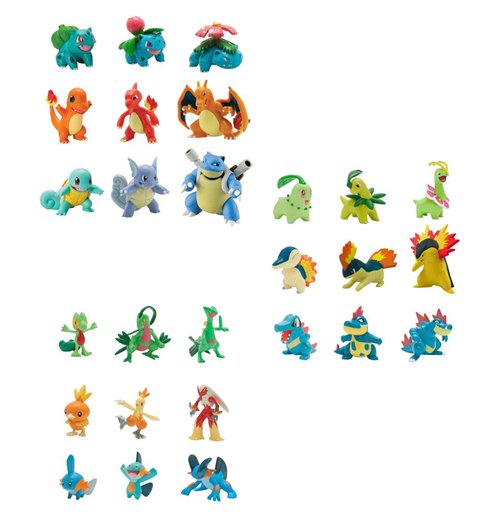
Pokemon 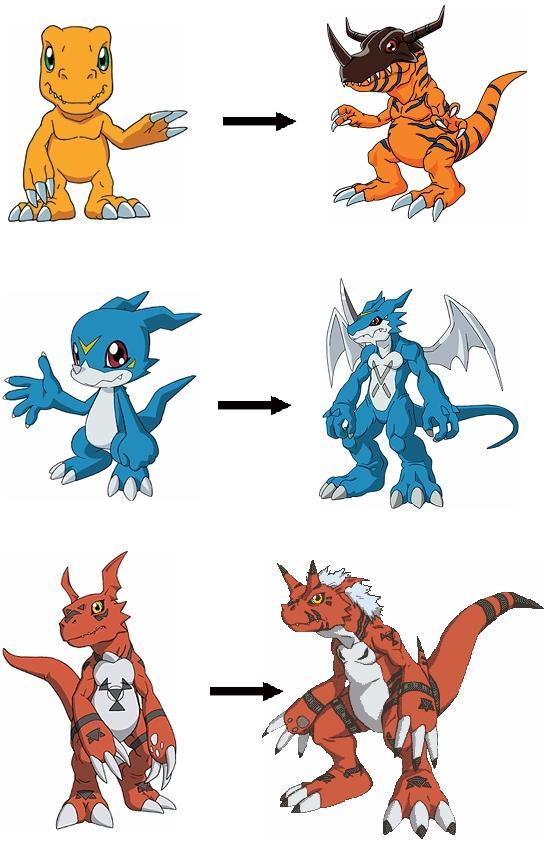
Digimon
The evolving self can be visualized in two different ways. One is focused on a person’s psychosexual development from infancy to adolescence while the other is focused on a person’s psychosocial development throughout his/her whole life. Both frameworks explore how the Id—the innermost desires of the self, the Ego—the cognitive processing of the self, and the Superego—the internalized moral code of the self—are manifested in the various time periods in one’s life.

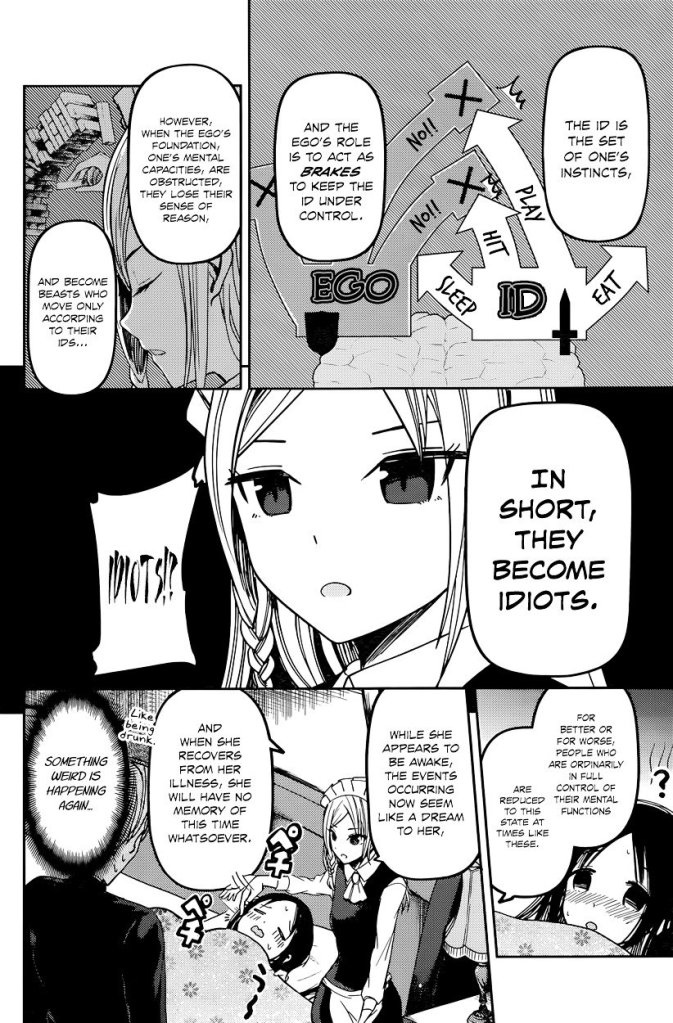
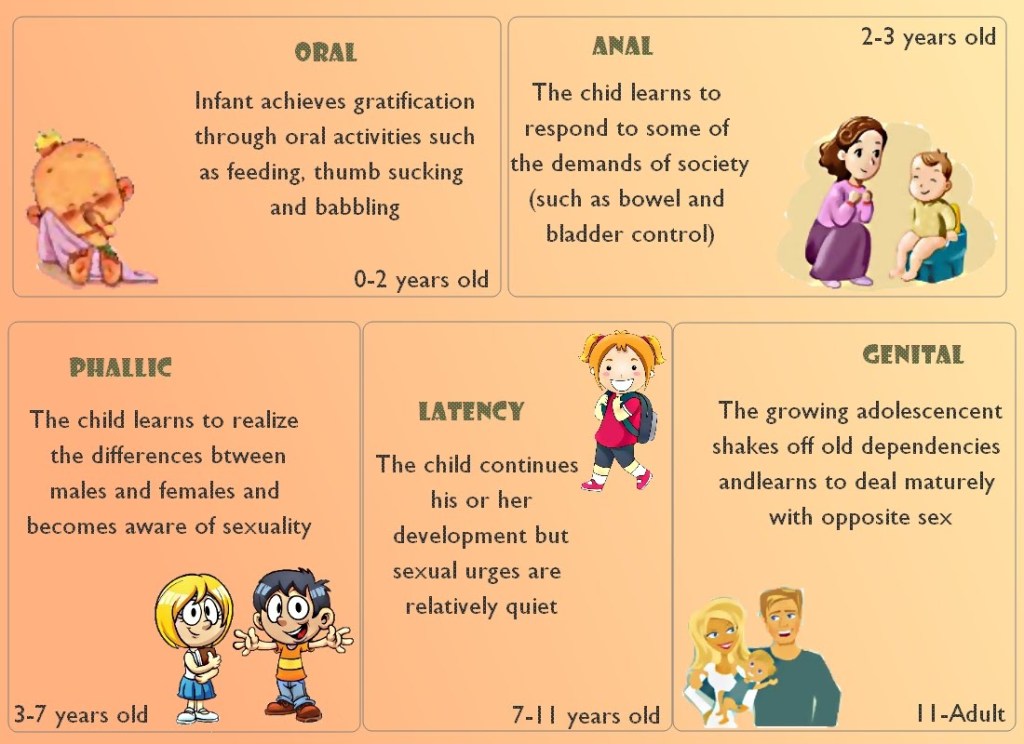
Sigmund Freud’s psychodsexual development consists of five stages—oral, anal, phallic, latency, and genital—with each having their own respective functions in the development of the self. Essentially, these psychosexual stages narrate the development of the ego of a person.
Oral stage is governed by self-love as he/she is still an infant at this time and his/her primary focus is the needs of nobody else but himself/herself. Anal stage is when a toddler undergoes toilet training in the hopes of alleviating or reducing his/her sadistic drives or aggressive behavior. Phallic stage is when the boy or the girl begins to develop sexual feelings for the parent that is the opposite of their sex, and is resolved through the identification of their selves with the parent of the same sex. Latency stage is when sexual feelings of the boy or the girl are temporarily repressed as these are sublimated into wholesome activities such as same-sex play such as exercising or simply running, learning in school, and acquiring important moral and social values. Finally, genital stage is when sexual desires return often stronger than before which causes a conflict between the id and the superego as they struggle to maintain a balance in maintaining the internalized moral code while displacing the sexual urges to another love object.
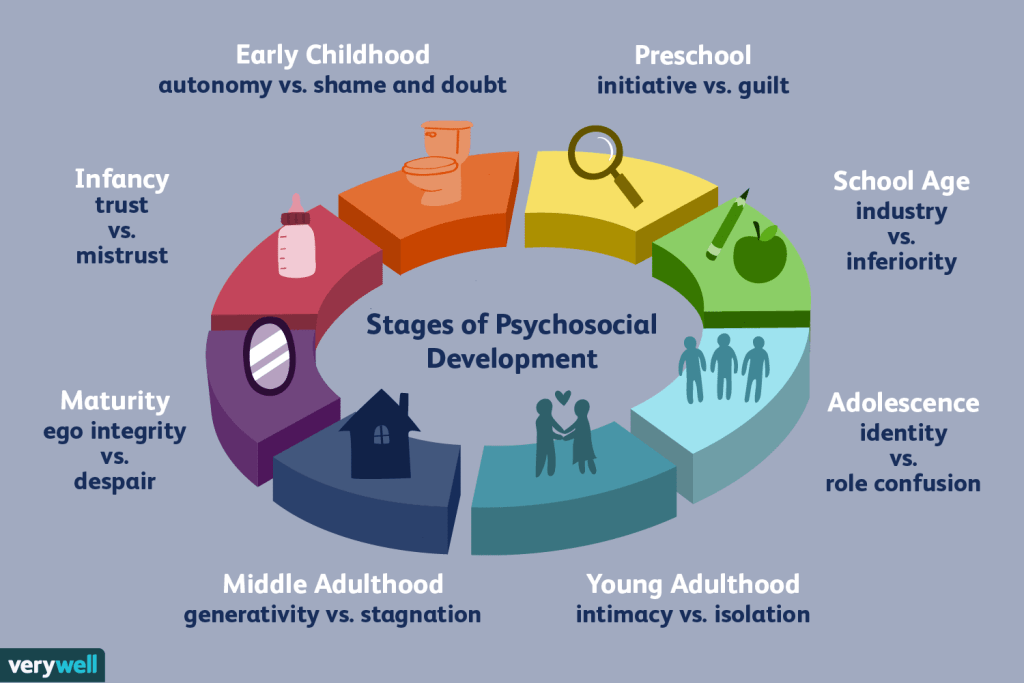
Erik Erikson’s psychosocial development consists of eight stages—trust versus mistrust, autonomy versus shame and doubt, initiative versus guilt, industry versus inferiority, identity versus role confusion, intimacy versus isolation, generativity versus stagnation, and ego integrity versus despair. It should be noted that development is shaped by the challenges that individuals face from the social relationships and institutions that they are involved in at each stage of their lives. Additionally, the epigenetic principle states that the stages occur in a sequence and that one has to go through each and every stage chronologically before reaching the final stage.
The first stage hinges on whether basic needs are consistently or inconsistently met as this determines whether the conflict of trust versus mistrust will be resolved or not. The second stage hinges on whether toddlers realize that they can direct their own behavior as this determines whether the conflict of autonomy versus shame and doubt will be resolved or not. The third stage hinges on whether preschoolers are challenged to control their behavior as this determines whether the conflict of initiative versus guilt will be resolved or not. The fourth stage hinges on whether school-aged children have more opportunities to learn as this determines whether the conflict of industry versus inferiority will be resolved or not. The fifth stage hinges on the choices among numerous values in one’s life as this determines whether the conflict of identity vs role confusion will be resolved or not. The sixth stage hinges on the primary task of finding a mate as this determines whether the conflict of intimacy versus isolation will be resolved or not. The seventh stage hinges on the creativity and productivity of an adult as this determines whether the conflict of generativity versus stagnation will be resolved or not. The eighth stage hinges on the wisdom, spirituality, and tranquility of an elder as this determines whether the conflict of ego integrity versus despair will be resolved or not.
On a side note, given that various tensions arise every now and then in one’s life, the self has developed coping mechanisms which are both universal as every person does this to a certain extent and unconscious as every person does not willingly do so. Some defense mechanisms include repression, reaction formation, fixation, regression, rationalization, denial, displacement, sublimation, projection, identification, compensation, and intellectualization. Each of these defense mechanisms have their own respective functions, but it is interesting that all defense mechanisms have a sense of repression to aid their main function.
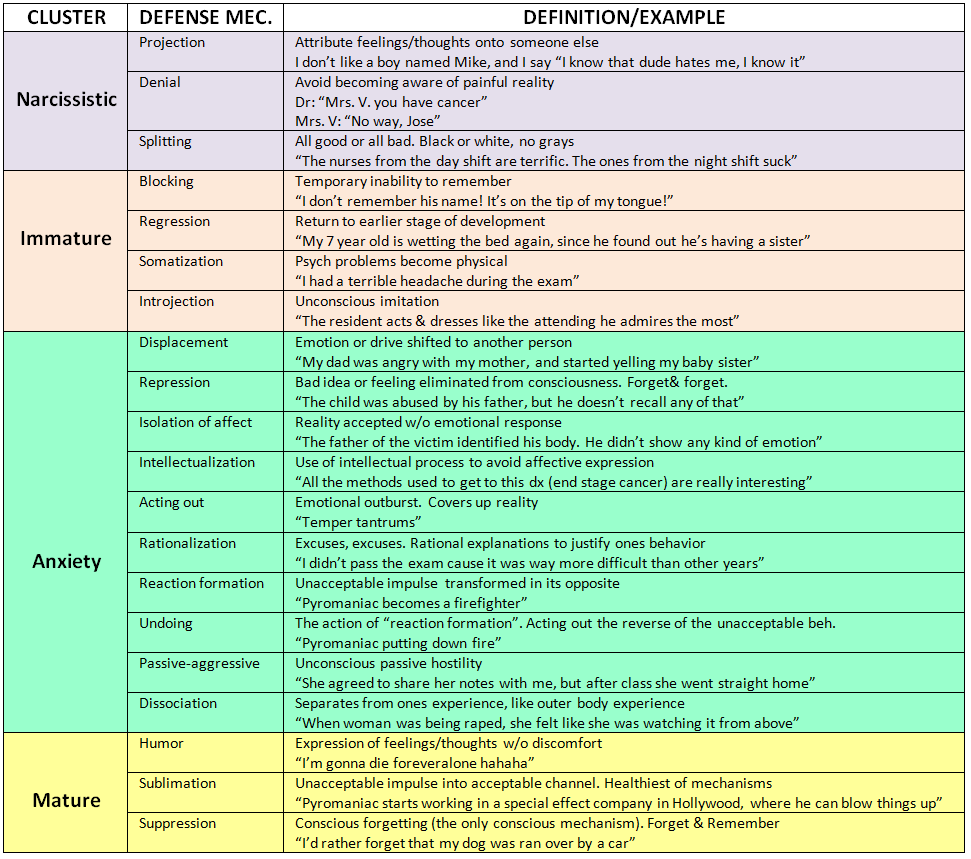
I find myself guilty of some defense mechanisms such as rationalization whenever I would get a low score on a quiz, regression whenever the academic workload starts to pile up as I tend to escape them by immersing myself in other trivial matters, and sublimation whenever I feel too stressed as I let the stress out by exercising. Additionally, this struck me as I myself deny that I do such things and my view on people who do such things isn’t that pleasant either. After watching the feral child who is neglected and isolated from the rest of humanity, I realized that doing so gravely affects one’s capabilities of interacting with people once exposed to them. They are extremely behind in the psychosocial stages with regards to the people in his/her same age group. Finally, these stages of development serve as a guideline on what one ought to do for the integration of a better self in that certain period of time.
With all this, we can now better understand what is crucial to the development of our own unique selves in each and every moment of our lives.
 Jacob's Journey