The self, with proximal processes at its core, is a complex concept consisting of multiple facets of viewing the self that can be further developed and understood through interactions with one’s immediate environment. One such facet is seeing the self as a holistic being with interconnected thoughts, feelings, sensations, and behaviors. With this framework, the self can then be defined as a set of three partial versions of itself unified by a common theme of maintaining homeostasis within the self and its environment, namely—the thinking self, the feeling self, and the mindful self.

Given that the self can be subdivided into three partial versions of itself, a summary of the function and importance of each partial self is essential to better understand the self as a whole.
The thinking self explains the inner workings of the mind in relation to its cognition. The main takeaway from the thinking self is the concept of the mind having both System 1 and System 2. System 1 is mainly concerned with automatic responses to a stimulus while System 2 is mainly concerned with thoughtful responses to a stimulus that cannot be immediately responded by System 1. Although both systems have their own functions, one is not necessarily better than the other as both complement each other in maintaining homeostasis with the self and the environment. In line with this are cognitive biases that may make one’s reasoning erroneous such as peak-end rule, duration neglect, representatives, and anchoring and adjustment. Being aware of these biases in reasoning will help one have a more sound flow of reasoning towards various stimuli.
The feeling self explains the various emotions present in a human and its unique features. The main takeaway from the feeling self is the framework on how one responds to a certain stimulus—antecedent condition, cognitive appraisal, and physiologicals and behaviorals. Antecedent condition, also known as either the context or situation, is essentially the stimulus that triggers an emotion. Cognitive appraisal, essentially the thought process or the interpretation of an event, states what emotion will be felt after assessing one’s thoughts and beliefs as these can impact how one feels and behaves. Finally, physiologicals and behaviorals are essentially the reactions, expressions, and responses that a person makes towards the stimulus. Furthermore, it should be noted that there are similar frameworks and theories on how emotions are expressed such as the James-Lange Theory, Cannon-Bard Theory, and Schachter’s Two-Factor Theory. Regardless of what theory is used, the expression of emotions or response to a stimulus can be seen in a framework that has an activating of an event, evaluation of beliefs, and fulfilling of consequences.
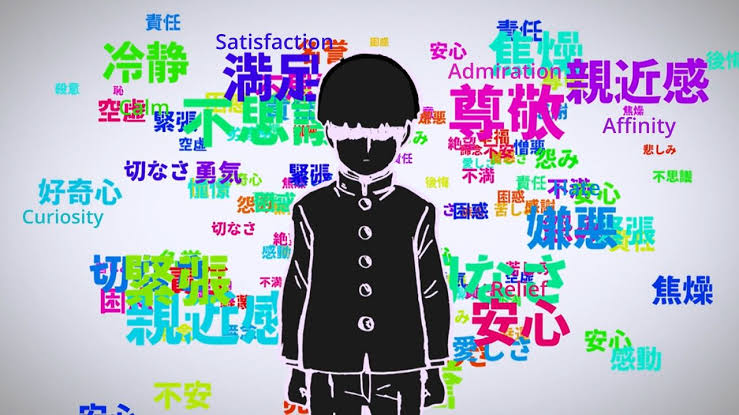
The mindful self explains how one ought to regulate his/her emotions. The main takeaway from the mindful self are the emotion regulation and the act of mindfulness as these help one take care of himself/herself better with its application. Mindfulness is the awareness that emerges through paying attention on purpose, in the present moment, non-judgmentally, to things as they are. Emotion regulation is the ability to manage one’s experience of emotion in terms of intensity and duration, and to manage strategically one’s expression of emotion in social contexts. Some examples of these processes are the Process Model of Emotion Regulation itself, the Hydraulic Model, the “Magic” Ratio, and the Broaden-and-Build Theory. Essentially, these aim to contribute a sense of well-being, self-efficacy, and a sense of connectedness to others within a person and to help him/her achieve his/her objectives.

Seeing how interconnected these three selves are struck me the most as each and every one of them are essential to one’s survival in life. Furthermore, these three selves form a balance within a person that helps richen his/her daily interactions with his/her immediate environment. After learning of the various processes of emotion regulation and mindfulness, I learnt that my self-care routine can still be better improved. Additionally, these can also be applied in my life, so that I can better maintain homeostasis between myself and my immediate environment. Finally, a lecture on depression further widened my knowledge on the complexities of it, how I might be able to better comfort or console people who are undergoing a depressive episode, and how practicing certain mindfulness techniques can help one alleviate depression.

On a side note, I am fascinated that the five main emotions as discussed by Paul Ekman are—joy, sadness, fear, disgust, and anger—the emotions as seen in Pixar’s “Inside Out”.
With all this, we can better understand how we react to certain stimulus, how we can better take care of ourselves, and how we can better interact with our immediate environment.
 Jacob's Journey